
Can You Fix a Gas Leak Yourself? Safety Rules & Code Requirements
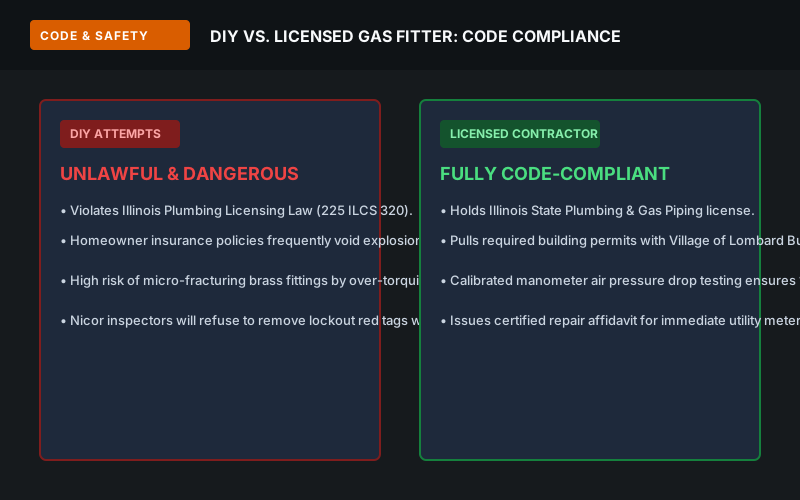
No, you should never attempt to fix a natural gas leak yourself. Under the Illinois Plumbing License Law (225 ILCS 320) and municipal building codes across Lombard and DuPage County, fuel gas piping modifications must be completed by a licensed plumbing or mechanical contractor. Amateur attempts risk catastrophic explosion, void homeowner insurance policies, and will be rejected by Nicor Gas inspectors during red-tag removal.
The Illusion of Simple Fixes
Unlike a dripping water faucet where an imperfect repair yields a puddle, an imperfect gas repair yields an invisible, accumulating explosive vapor cloud. Tightening an old black iron pipe with a pipe wrench often cracks adjacent brittle threads inside walls, turning a minor micro-leak into an immediate structural catastrophe.
Why DIY Plumbing Fails on Gas Systems
Homeowners frequently tackle DIY painting, carpentry, and even drain snaking. However, mechanical gas fitting requires specialized physics, chemistry, and metallurgic knowledge that online tutorials rarely explain:
1. Static Electricity & Tool Sparks
Standard steel pipe wrenches strike steel pipe with considerable kinetic force. In an unventilated basement with escaping natural gas, a single spark generated by metal-on-metal impact can ignite the plume. Professional technicians use intrinsically safe diagnostic instruments, ensure full atmospheric ventilation, and follow zero-spark protocols before applying physical torque.
2. Pipe Thread Geometry & Chemical Sealants
Water piping often forgives minor thread discrepancies because water molecules are large and surface tension inhibits seepage. In contrast, methane (CH4) is an exceptionally small, low-viscosity hydrocarbon molecule that will escape through micro-voids as small as 1 micron.
DIYers frequently use standard white Teflon tape (meant only for water lines) instead of high-density yellow PTFE tape rated specifically for natural gas (ANSI/UL 536). Standard white tape disintegrates under natural gas solvents, leading to joint failure within months. Learn more in our common gas connection mistakes guide.
3. Over-Torquing Flare Fittings
When connecting appliances like kitchen ranges or dryers, DIYers commonly believe "tighter is better." Appliance connectors use 45-degree brass flare fittings that seal via metal compression. Over-tightening with oversized wrenches deforms the soft brass cone, crushes the flared collar of the stainless tube, and creates invisible stress micro-fractures that leak under line pressure.
The Legal & Financial Repercussions of DIY Gas Work
1. Insurance Policy Voiding
Every standard homeowner insurance policy includes clauses requiring maintenance to adhere to applicable building codes and licensing laws. If an unpermitted gas line repair fails and causes a fire or explosion, forensic fire investigators will trace the cause directly to the unapproved fittings or improper sealant. The insurance underwriter has legal grounds to deny the claim entirely, leaving the homeowner personally liable for hundreds of thousands of dollars in property loss.
2. Nicor Red-Tag Lockout Rejection
If your gas meter was red-tagged by Nicor Gas, a utility technician will return to inspect the repair before unlocking the meter. Under utility policy:
- The technician requires proof of an Illinois plumbing license and contractor registration.
- The technician verifies that a formal 15-minute manometer air pressure test was executed.
- Nicor will refuse to unlock the meter for a homeowner who claims to have tightened the pipe themselves.
Attempting to bypass the padlock yourself is a criminal offense under Illinois criminal statute 720 ILCS 5/16-14 (unlawful interference with public utility services).
Comparison: DIY Attempt vs. Licensed Professional
| Factor | DIY Attempt | Licensed Independent Contractor |
|---|---|---|
| Legal Compliance | Violates Illinois Plumbing Licensing Law | Fully licensed (Illinois 055 / 058 license) |
| Diagnostic Tools | Soapy dish water (causes brass corrosion) | Calibrated electronic sniffers & manometers |
| Materials Used | Generic hardware store fittings | Schedule 40 black steel & bonded CSST |
| Pressure Testing | None (relies on smell or soap) | 15-minute zero-drop air pressure hold test |
| Utility Red-Tag Clearance | Rejected by Nicor inspectors | Certified repair paperwork accepted |
| Insurance Protection | High risk of claim denial | Backed by commercial contractor liability |
When You Should Call a Professional Immediately
Whenever you smell gas, hear a hissing pipe, or experience a locked meter, never hesitate. Protect your family, your property, and your insurance coverage by relying on qualified professionals.
Contact LeakSecure Gas Dispatch at (630) 555-0100 to connect with a licensed independent contractor for code-compliant gas leak repair in Lombard.
Frequently Asked Questions
Is it illegal to work on your own gas lines in Illinois?
Under the Illinois Plumbing License Law (225 ILCS 320) and municipal building codes in Lombard, work on fuel gas piping distribution systems must be completed by a licensed plumber or certified mechanical contractor. While some municipalities allow minor homeowner fixture replacements, gas line modifications require building permits and licensed testing to protect public safety.
Will insurance cover damage if a DIY gas repair causes a fire?
Insurance policies contain strict 'illegal acts' and 'workmanship' exclusions. If an unpermitted, unlicensed DIY gas repair triggers a fire or explosion, forensic investigators will trace the unapproved fittings or improper pipe dope, giving the insurance underwriter valid legal grounds to deny the property loss claim.