
Gas Appliance Hookup in Lombard, IL
Installing a new gas stove, clothes dryer, high-recovery water heater, or standby generator requires more than simply tightening a flexible hose. Improper flare connections, missing sediment traps, and code-violating shutoffs account for a substantial percentage of residential gas leaks. We connect you with licensed local technicians for safe, permit-compliant appliance hookups.
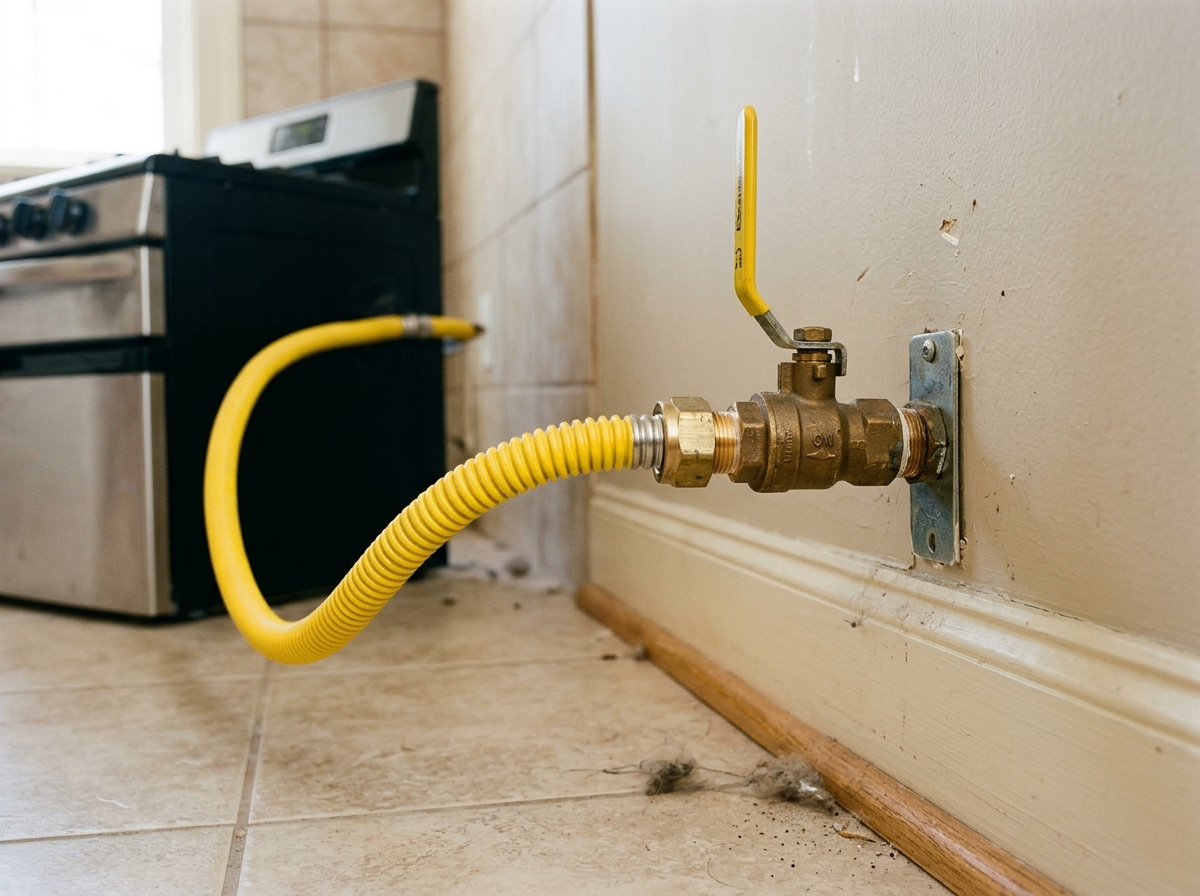
Under the Illinois Plumbing Code and NFPA 54, every residential gas appliance must be connected via an ANSI-certified flexible connector or rigid steel pipe, equipped with a dedicated manual shutoff valve located in the same room within 6 feet of the unit, and preceded by a sediment trap (dirt leg) to prevent debris from fouling internal gas burners.
The one specific thing this page says that generic pages do not: Why Teflon tape must never touch 45-degree flare fittings, the single-use corrugated connector rule, and mandatory dedicated shutoff valve distances under Lombard residential codes.
The Critical Technical Errors in Appliance Connections
When homeowners buy a new gas range or clothes dryer from a retail big-box store, delivery drivers frequently hook up the appliance as an "installation service." Delivery personnel are rarely licensed plumbers and frequently make dangerous code-violating mistakes:
1. Applying Teflon Tape to Flare Threads
Standard black iron pipes use tapered NPT threads that seal along the spiral mating threads using Teflon tape or pipe dope. In contrast, appliance connector fittings use 45-degree flare joints. The seal occurs exclusively via metal-to-metal compression between the beveled brass cone and the flared connector collar.
When an untrained installer wraps Teflon tape around flare threads, the tape shreds under the flare nut. Fragments lodge between the beveled brass face and the tube collar, preventing the metal surfaces from seating tightly. Gas slowly seeps past the damaged seal, creating a persistent, hazardous odor behind the range. For a complete review of common hazards, read our guide to gas appliance installation mistakes.
2. Reusing Old Corrugated Flex Lines
Corrugated stainless steel tubing (CSST) connectors are engineered for single-use installation. Bending an aged connector to push a new appliance against the wall induces metal fatigue along the corrugated ridges. Micro-fractures open, causing invisible pinhole gas leaks under line pressure. Licensed contractors always replace the flexible connector, flare adapters, and shutoff whenever an appliance is upgraded.
3. Missing Sediment Traps (Dirt Legs)
Illinois Plumbing Code requires a sediment trap installed upstream of appliances like water heaters, boilers, and furnaces. Black iron gas mains carry fine pipe scale, rust, and thread shavings. A sediment trap consists of a tee fitting with a capped, downward-facing 3-inch nipple that creates a dead pocket. Gravity forces solid particulates to fall into the cap before gas turns into the appliance gas control valve. Without a sediment trap, debris jams the internal solenoid valve, causing pilot failure or uncontrolled gas leakage.
4. Dedicated Shutoff Valve in the Same Room
Village of Lombard building inspectors require that every gas appliance have an accessible, individual manual shutoff valve located in the same room, ahead of the flexible connector, and within 6 feet of the appliance. Shutoff valves hidden inside basement ceilings two floors below do not satisfy safety codes. If your shutoff is seized, missing, or corroded, your technician will perform a gas shutoff valve replacement during hookup.
Appliances Covered by Professional Dispatch
Through LeakSecure Gas Dispatch, you can connect with local contractors who hook up and verify:
- Kitchen Gas Ranges & Cooktops: High-output burners requiring proper 1/2-inch or 3/4-inch branch connections.
- Gas Clothes Dryers: Safe vibration-resistant connections with approved exhaust venting coordination.
- Tankless & Storage Water Heaters: Sizing supply pipes to deliver full BTU demand without starving home heating.
- Whole-House Standby Generators: High-capacity outdoor lines engineered for sub-zero emergency electrical outages.
- Gas Fireplaces & Outdoor Kitchen Grills: Weather-resistant black iron and polyethylene line installations.
If your existing pipe branch is undersized for a new high-BTU appliance, your contractor can provide a code-compliant plan for gas line replacement before final connection.
Related Gas Services in Lombard
Gas Shutoff Valve Repair
Upgrade stuck or leaking appliance shutoff valves with modern quarter-turn brass valves.
Gas Line Installation
Extend dedicated high-volume lines to new ranges, dryers, or backup generators.
Gas Leak Detection
Electronic sniffer verification across all newly installed appliance flare unions.
Installing a New Gas Appliance in Lombard?
Ensure your kitchen stove, dryer, or water heater is hooked up safely and meets all Village of Lombard building codes. Call today to connect with a licensed local gas technician.