
Gas Line Installation & Replacement in Lombard, IL
Replacing 50-year-old corroded black iron pipes in a vintage basement or running high-capacity gas lines for a backup generator requires precise pipe sizing and strict code compliance. We connect you with licensed local contractors who engineer and install safe, durable gas piping systems across Lombard and DuPage County.
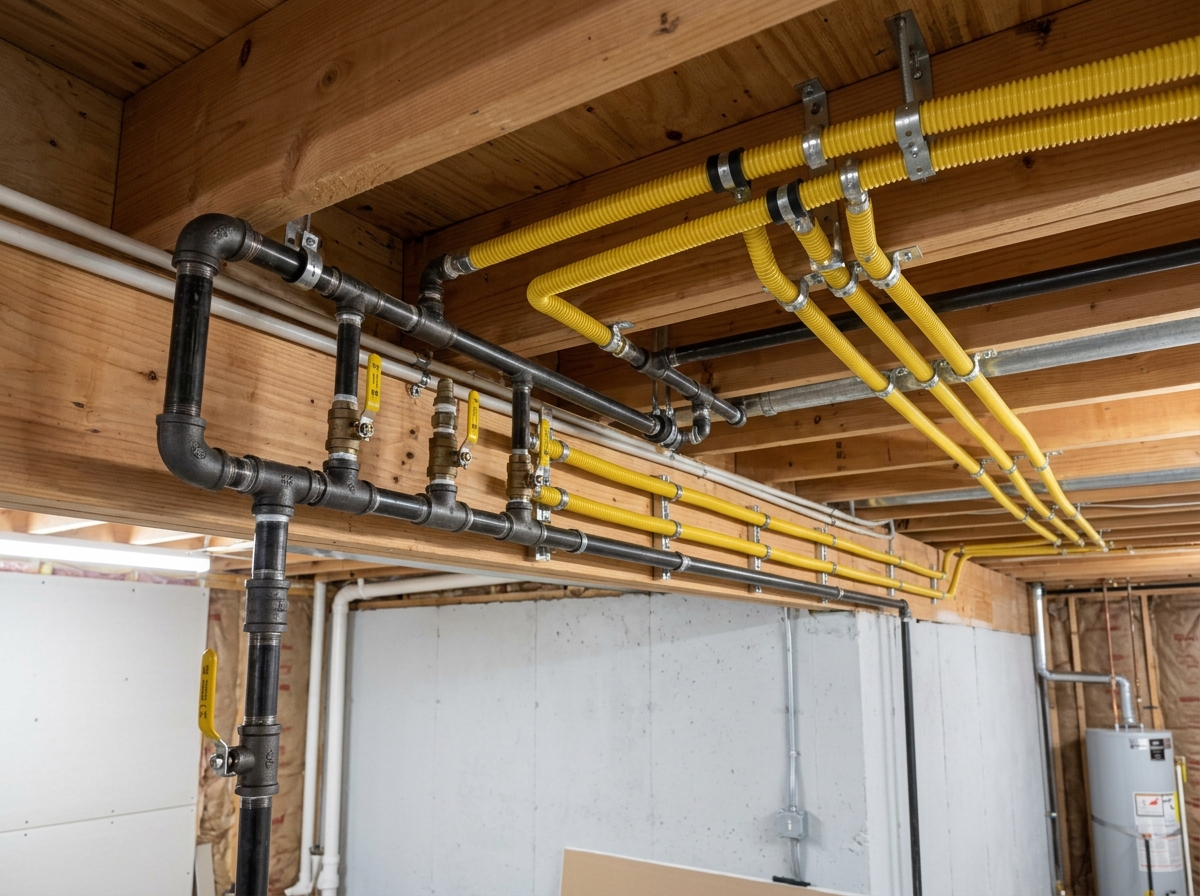
Gas line installation involves calculating total appliance BTU load demand against total developed pipe length, selecting appropriate pipe diameters (such as 3/4-inch or 1-inch schedule 40 black steel), securing code-mandated shutoff valves, and executing permitted pressure tests witnessed by municipal or utility inspectors before gas service is activated.
The one specific thing this page says that generic pages do not: How pipe sizing formulas (BTU load vs equivalent feet of pipe) and CSST dielectric bonding rules prevent gas pressure starvation when upgrading to high-demand appliances in Lombard homes.
Avoiding Gas Starvation When Adding Modern Appliances
When homes in Lombard were constructed in the 1950s and 1960s, gas systems were engineered for modest heating demands: a single 80,000 BTU gravity furnace, a 30,000 BTU water heater, and a basic kitchen stove. Standard practice was running 1/2-inch black iron pipe from the meter.
Today, homeowners routinely install 199,000 BTU tankless water heaters, 60,000 BTU commercial gas ranges, and 22 kW standby backup generators that draw upwards of 280,000 BTUs under full electrical load. If these units are tied into legacy 1/2-inch lines, the system suffers severe pressure drop. On cold Illinois winter mornings when the furnace and water heater ignite simultaneously, gas pressure plummets below the required 5.0 to 7.0 inches of water column (W.C.). The appliances flame out, lock into error codes, or produce deadly carbon monoxide due to incomplete combustion.
Contractors in the LeakSecure Gas Dispatch network perform precise calculations based on the National Fuel Gas Code (NFPA 54 / ANSI Z223.1). They evaluate the meter capacity (standard residential meters deliver 250 CFH, or roughly 250,000 BTUs) and determine whether your meter requires a utility upgrade from Nicor Gas alongside an enlarged 1-inch or 1-1/4-inch supply trunk.
Black Iron Steel vs. Flexible CSST: Choosing the Right Material
Your contractor will determine which piping material suits your home's layout:
- Schedule 40 Black Steel Pipe: The traditional standard for primary supply trunks and basement utility runs. Rigid steel resists physical impact and provides lifetime structural durability, joined with tapered NPT pipe threads sealed with gas-rated thread compound.
- Corrugated Stainless Steel Tubing (CSST): Flexible yellow or black-jacketed tubing that routes continuously through wall studs and floor joists without requiring intermediate elbows. Because CSST bends around obstacles, installation causes minimal disturbance to finished ceilings.
Critical Electrical Bonding for CSST Systems
If CSST is installed in your home, building codes in DuPage County strictly require electrical bonding. A direct lightning strike or nearby ground charge can induce voltage onto unbonded gas tubing, arcing through the thin stainless steel wall to an adjacent copper pipe or metal duct, burning a pinhole that ignites a high-pressure jet of flame inside your wall.
A licensed contractor installs a dedicated brass bonding clamp on the rigid pipe upstream of the CSST connection and runs a continuous minimum 6 AWG copper ground wire directly to your home's electrical service grounding electrode.
The Permitting Process in the Village of Lombard
Installing a new gas branch or replacing existing lines requires a mechanical or plumbing permit issued by the Village of Lombard Building Department. After the contractor installs the pipe and connects test gauges, a municipal inspector visits the home to verify:
- Pipe sizing matches submitted appliance BTU specifications.
- Proper pipe hangers are spaced every 6 to 8 feet to prevent line sagging.
- A dedicated emergency shutoff valve is located within 6 feet of each appliance. Learn more about gas shutoff valve requirements.
- The system holds air test pressure for the required observation period without decay.
Working with licensed professionals ensures every step meets Village guidelines, protecting your home insurance coverage and resale value. Read our guide on why gas piping must never be attempted DIY.
Related Gas Services in Lombard
Gas Appliance Hookup
Safe gas range, dryer, and water heater connections using certified flare fittings.
Emergency Gas Leak Repair
24/7 rapid response for active line ruptures and Nicor meter lockout clearances.
Gas Leak Detection & Testing
Pressure drop testing and electronic sniffer inspections across all piping runs.
Planning a Gas Line Installation in Lombard?
Connect with licensed local mechanical gas contractors for precision pipe sizing, code permits, and safe installation across DuPage County.