
Signs of a Gas Leak in Your Home: Odors, Sounds & Physical Symptoms
The primary signs of a residential gas leak are a pungent rotten egg or sulfur odor (mercaptan), an audible hissing sound near pipe fittings or appliances, unexplained physical symptoms like headaches or dizziness that subside outdoors, and foaming micro-bubbles when non-corrosive detection fluid is applied to pipe threads.
Key Safety Takeaways
- Odor Threshold: Natural gas is naturally odorless; utilities add mercaptan so humans detect leaks as low as 1% concentration.
- Odor Fade Phenomenon: Brand new unseasoned steel pipe or wet soil can scrub mercaptan from methane, making some leaks odorless.
- Immediate Action: If you smell gas strongly, evacuate immediately. Do not flip light switches or use landline phones inside.
- Professional Verification: Technicians use electronic sniffing probes and manometer gauges to verify leaks safely.
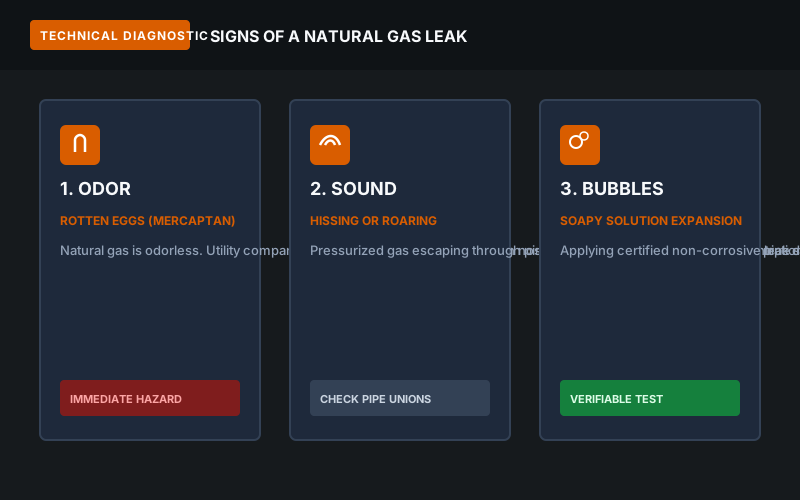
1. Olfactory Signs: The Rotten Egg Odor (Mercaptan)
Methane (CH4), the primary hydrocarbon in natural gas, is colorless, tasteless, and odorless. To ensure public safety, federal regulations (49 CFR 192.625) require distribution utilities like Nicor Gas to odorize gas so that it is readily detectable by a person with a normal sense of smell at a concentration in air of one-fifth of the lower explosive limit (LEL).
The odorant used is typically tertiary butyl mercaptan or a blend of thiols and sulfides. Humans perceive this compound as sulfur, rotten cabbage, or spoiled eggs. In homes throughout Downtown Lombard and DuPage County, the smell is often first noticed in unventilated basements, furnace rooms, or directly behind kitchen stoves.
Understanding "Odor Fade"
Experienced gas technicians know that you cannot rely exclusively on your sense of smell. Under certain physical conditions, mercaptan stripping or "odor fade" occurs:
- Underground Soil Adsorption: If an underground gas line rusts in wet DuPage clay soil, the reactive clay particles physically filter out and bind the sulfur molecules while allowing methane to pass unhindered into foundation cracks.
- New Steel Pipe Oxidation: When brand-new, unconditioned black iron pipe is installed, internal mill scale and rust react with mercaptan, neutralizing its odor until the steel interior becomes saturated.
- Olfactory Fatigue: Prolonged exposure to low levels of mercaptan desensitizes human nasal receptors within minutes, making an occupant unaware that gas concentrations are actively rising.
2. Auditory Signs: Hissing, Whistling, and Roaring
Residential natural gas enters homes at low pressures, typically between 1/4 PSI (approximately 7 inches of water column) and 2 PSI before the appliance regulator. When gas escapes through a pinhole fissure, cracked pipe union, or deteriorated valve stem, it creates distinct sound profiles:
- Faint Whistle: Typical of micro-leaks at threaded couplings where pipe compound has shrunk or cracked.
- Continuous Hiss: Characteristic of split appliance flexible connectors or damaged flare fittings behind ranges or clothes dryers.
- Audible Roar: Indicates a catastrophic line rupture, sheared meter pipe, or severed outdoor underground service lateral.
If you hear an audible hiss near a gas line, do not attempt to feel for the leak with your bare hand. Static electricity generated by your clothing can ignite the escaping gas plume.
3. Physical Health Symptoms in Occupants
Natural gas is not inherently toxic in the way carbon monoxide is, but high concentrations act as a simple asphyxiant by displacing breathable oxygen in enclosed spaces. Occupants in a home with an undetected gas leak may experience:
- Unexplained headaches that worsen in specific rooms.
- Dizziness, lightheadedness, and difficulty concentrating.
- Nausea and unexplained fatigue.
- Eye and throat irritation from sulfur additives.
- Pets exhibiting lethargy, disorientation, or vomiting.
A critical diagnostic clue is symptom relief: if your headache or nausea clears within 20 minutes of stepping outside into fresh air, hazardous indoor air contamination is likely present. Review our comparison guide on natural gas vs carbon monoxide differences to distinguish between fuel gas leaks and poisonous combustion fumes.
4. Environmental and Visual Indicators Outdoors
Gas leaks are not confined to basements. Buried yard lines running to detached garages, pool heaters, or outdoor gas lanterns can corrode or rupture from root intrusion. Watch for these outdoor indicators:
- Patches of Dead Vegetation: Underground methane displaces oxygen from root zones. A distinct patch of brown, dying grass or dead shrubs directly above a buried gas line is a classic indicator.
- Bubbling Puddles: During rainstorms, look for standing water that appears to be boiling or bubbling without wind.
- Blowing Dirt: Dry soil or leaves being continuously displaced from the ground without surface air movement.
Comparison Table: Minor Odor vs. Immediate Emergency
| Symptom | Probable Cause | Urgency Level | Required Action |
|---|---|---|---|
| Faint smell for 3 seconds when stove burner clicks | Normal unburned ignition fuel | Low / Normal | Ensure burner ignites cleanly within 4 seconds |
| Persistent sulfur odor in basement furnace room | Thread sealant failure or loose flare union | High / Urgent | Schedule prompt leak detection and testing |
| Audible hissing with intense rotten egg stench | Active line puncture or split valve | CRITICAL EMERGENCY | Evacuate immediately; call 911 / Nicor from outside |
| Physical symptoms (dizziness, nausea, headache) | Oxygen displacement or combustion byproduct | CRITICAL EMERGENCY | Evacuate building immediately to fresh air |
What to Do If You Suspect a Gas Leak
If you detect warning signs, prioritize life safety. Evacuate all occupants and pets. Do not touch electrical switches or landline phones. Walk across the street and call Nicor Gas at 888-642-6748 or call 911.
Once emergency crews have safely isolated the meter, contact LeakSecure Gas Dispatch at (630) 555-0100 to connect with a licensed independent contractor for code-compliant emergency gas leak repair in Lombard.
Frequently Asked Questions
Can you have a gas leak without smelling rotten eggs?
Yes. While utilities inject mercaptan to create a distinct sulfur odor, odor fade can occur when gas passes through wet clay soil or unconditioned new steel pipe. Additionally, individuals with olfactory fatigue or smell loss may miss faint odors, making physical symptoms and electronic detectors essential.
What does a gas leak hissing sound resemble?
A gas leak hissing sound resembles air slowly escaping a bicycle tire or a high-pressure aerosol can spraying continuously. It is typically heard near flexible appliance connectors, threaded pipe elbows behind furnaces, or at the outdoor meter regulator.